Hey everyone, it’s been a minute but I’m back! A lot happened in the U.S. during the pandemic, and one of the biggest changes was the shift in administration, which resulted in Juneteenth, which commemorates the date of June 19, 1865, becoming a new American holiday.
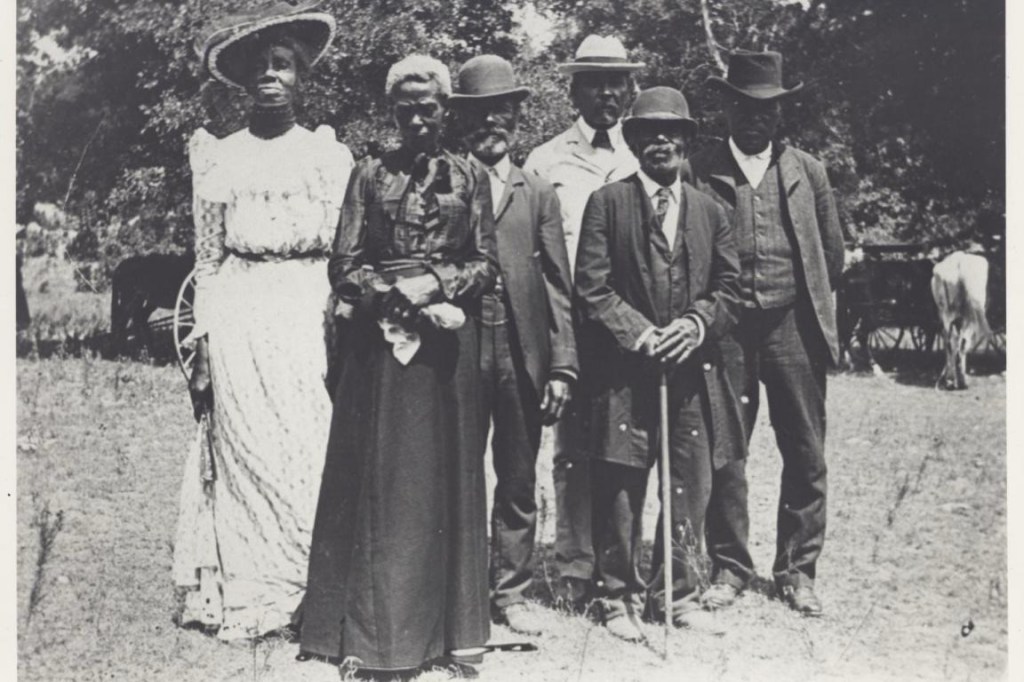
On “Freedom’s Eve,” or the eve of January 1, 1863, the first Watch Night services took place. On that night, enslaved and free African Americans gathered in churches and private homes all across the country awaiting news that the Emancipation Proclamation had taken effect. At the stroke of midnight, prayers were answered as all enslaved people in Confederate States were declared legally free. Union soldiers, many of whom were black, marched onto plantations and across cities in the south reading small copies of the Emancipation Proclamation spreading the news of freedom in Confederate States. Only through the Thirteenth Amendment did emancipation end slavery throughout the United States.
But not everyone in Confederate territory would immediately be free. Even though the Emancipation Proclamation was made effective in 1863, it could not be implemented in places still under Confederate control. As a result, in the westernmost Confederate state of Texas, enslaved people would not be free until much later. Freedom finally came on June 19, 1865, when some 2,000 Union troops arrived in Galveston Bay, Texas. The army announced that the more than 250,000 enslaved black people in the state, were free by executive decree. This day came to be known as “Juneteenth,” by the newly freed people in Texas. Juneteenth marks our country’s second independence day.
https://nmaahc.si.edu/explore/stories/historical-legacy-juneteenth
The Historical Legacy of Juneteenth
Juneteenth Holiday Information
The Creation and History of HBCU
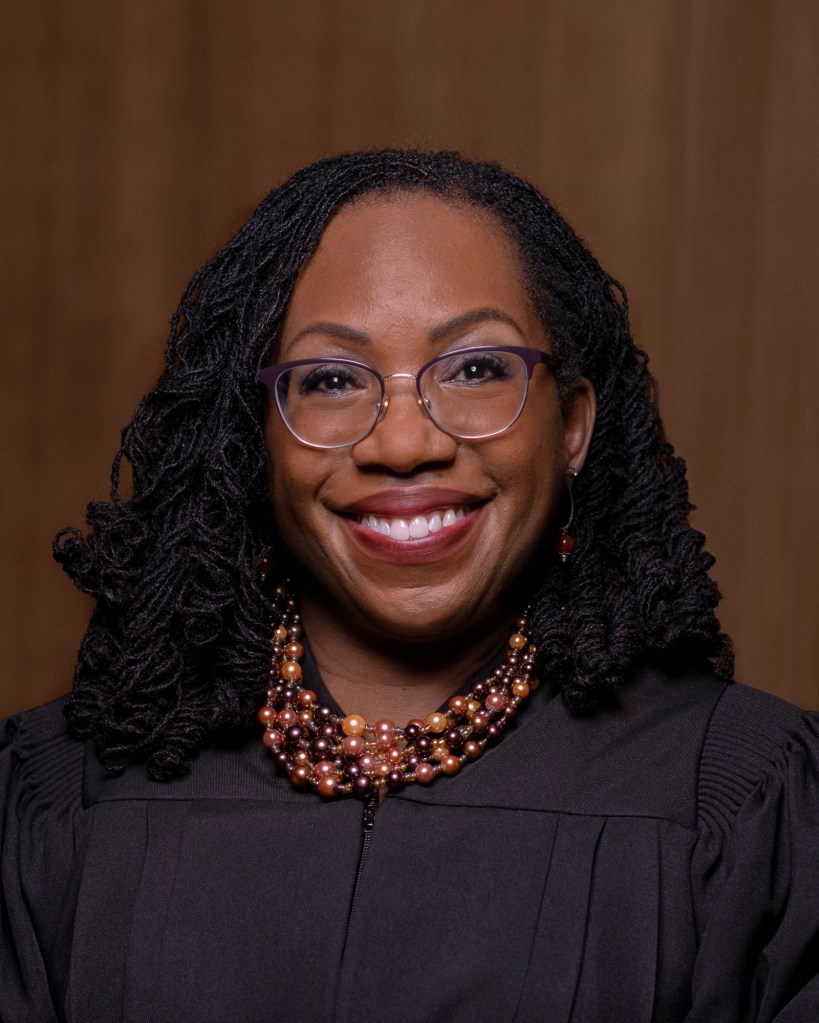
We also have a new Supreme Court Justice, and her name is Judge Ketanji Brown Jackson. She is the first Black woman to serve on the Supreme Court here in the United States.
Justice Ketanji Brown Jackson was born in Washington, D.C., on September 14, 1970. She was the first of two children of Johnny and Ellery Brown, both of whom were public school teachers. She received a B.A., magna cum laude, from Harvard-Radcliffe College in 1992, and a J.D., cum laude, from Harvard Law School in 1996.
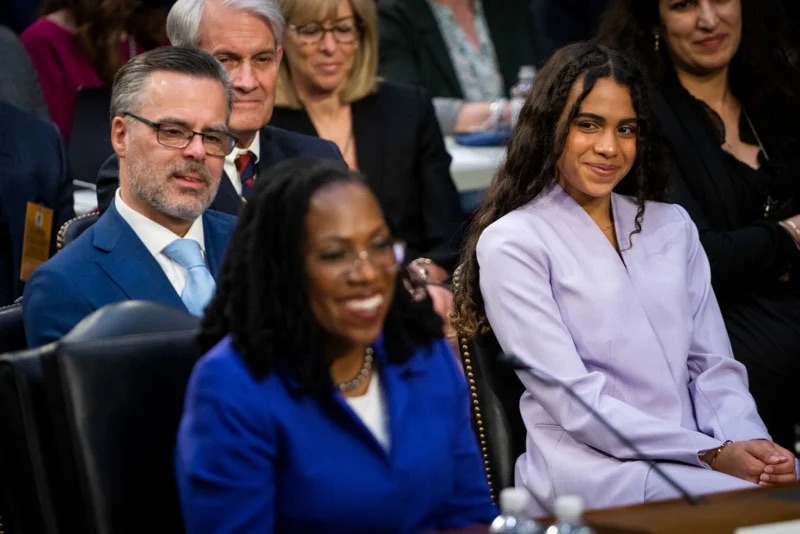
She served as a law clerk for Judge Patti B. Saris of the U.S. District Court for the District of Massachusetts from 1996 to 1997, Judge Bruce M. Selya of the U.S. Court of Appeals for the First Circuit from 1997 to 1998, and Justice Stephen G. Breyer of the Supreme Court of the United States during the 1999 Term.
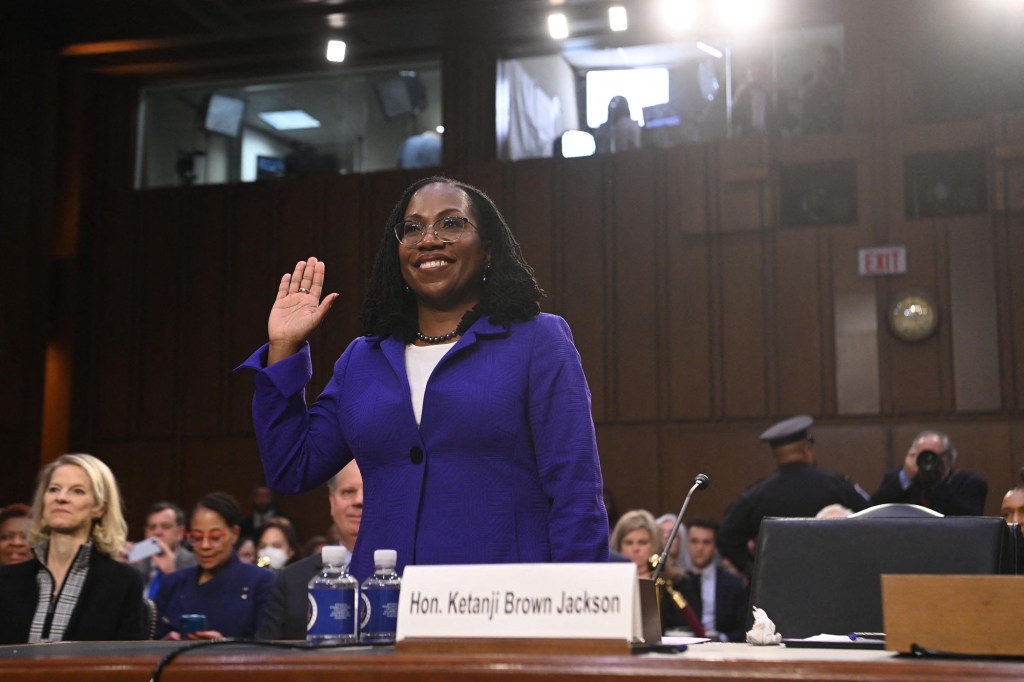
After three years in private practice, she worked as an attorney at the U.S. Sentencing Commission for two years, as an assistant federal public defender in Washington, D.C., for two years, and again in private practice for three years. She then served as a Vice Chair and Commissioner on the U.S. Sentencing Commission from 2010 to 2014.
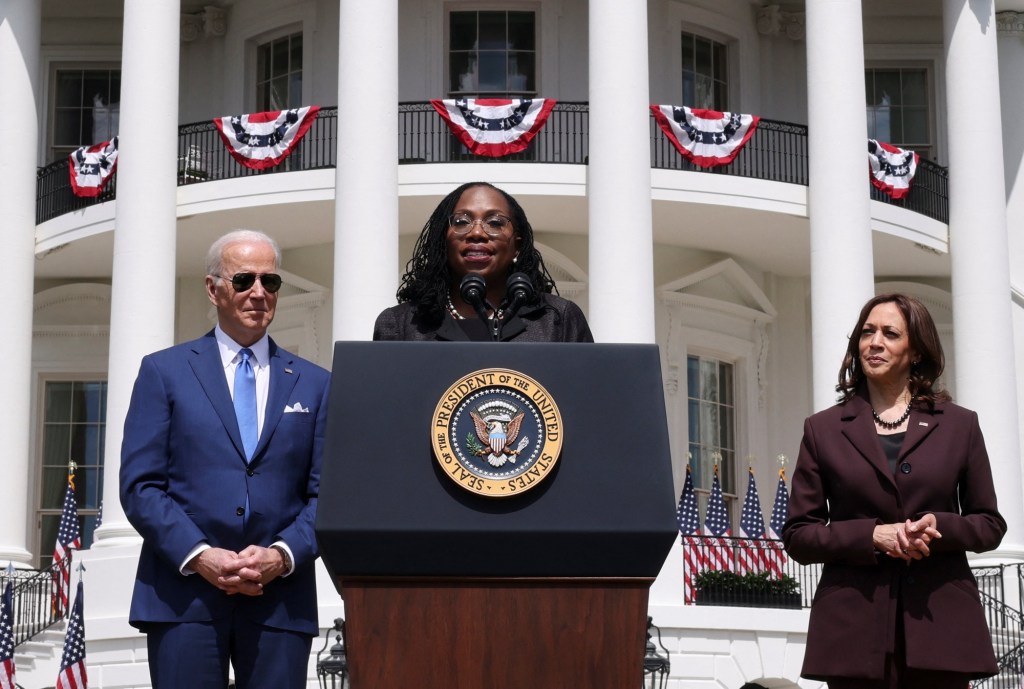
In 2012, President Barack Obama nominated her to the U.S. District Court for the District of Columbia, where she served from 2013 to 2021. President Joe Biden appointed her to the U.S. Court of Appeals for the D.C. Circuit in 2021 and then nominated her as an Associate Justice of the U.S. Supreme Court in 2022. She took her seat on June 30, 2022, becoming the first Black woman to sit on the Court.
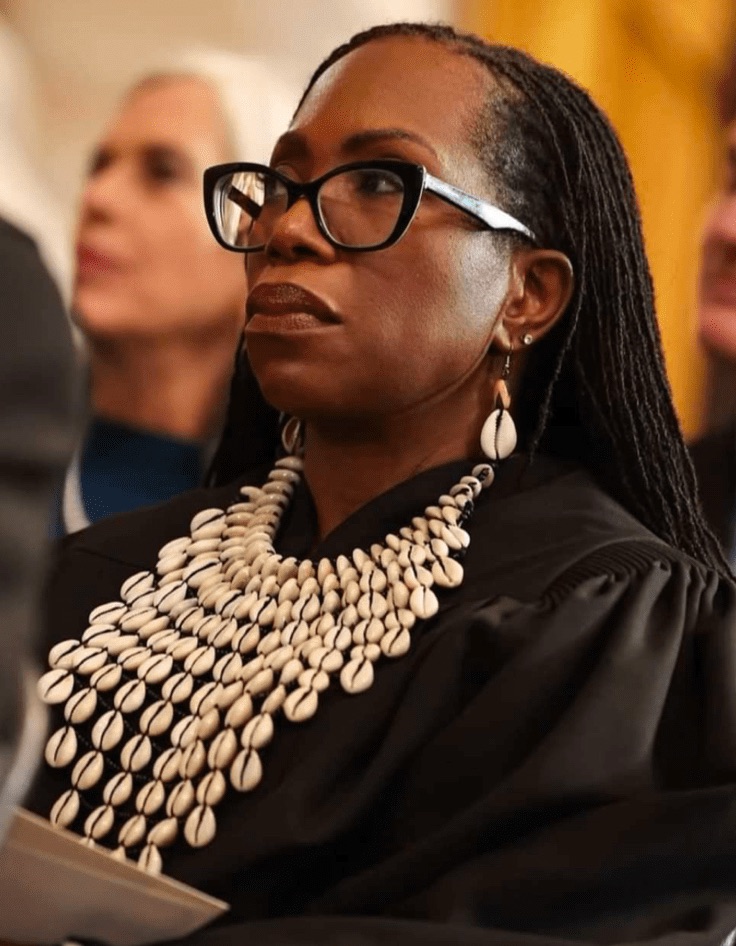
In this photo, she is wearing cowrie shells for the 2025 inauguration.
There is a lot of significance in this, and in honor of Black History Month I would like to share what it means.
As early as the 14th century, cowrie shells were used on Africa’s western coast, according to the National Museum of African American History & Culture. They were also traded for goods and services throughout Africa, Asia, Europe, and Oceania.
Due to their small size and durability, they served as currency. They even represented power in trade: Europeans in the 16th century used cowries to enter African trade markets. Shells were used to purchase goods, which included people.
Historians speculate that cowrie shells were viewed as a talisman to resist enslavement. Africans used them as charms for protection. This is where their strength lies. And here also lies the messaging represented by Justice Jackson wearing them, especially as a descendant of slaves.
An accessory implicating resistance on a day representing Martin Luther King Jr. is significant. And it alludes to the long-established value of cowrie shells in tandem with Justice Ketanji Brown Jackson’s unique position of power.
Justice Ketanji Brown Jackson Cowrie Shells
She is aware of the power she holds.
I love that she has been able to pursue a career in law and the arts. In spite of the serious role she has as a Judge, she has starred on Broadway in the play Romeo and Juliet in 2024.
As an advocate and teacher for arts education, and a longtime member of the International Thespian Society, this brings me so much joy to see.
While living in DC, I had the amazing opportunity to be an artist again.
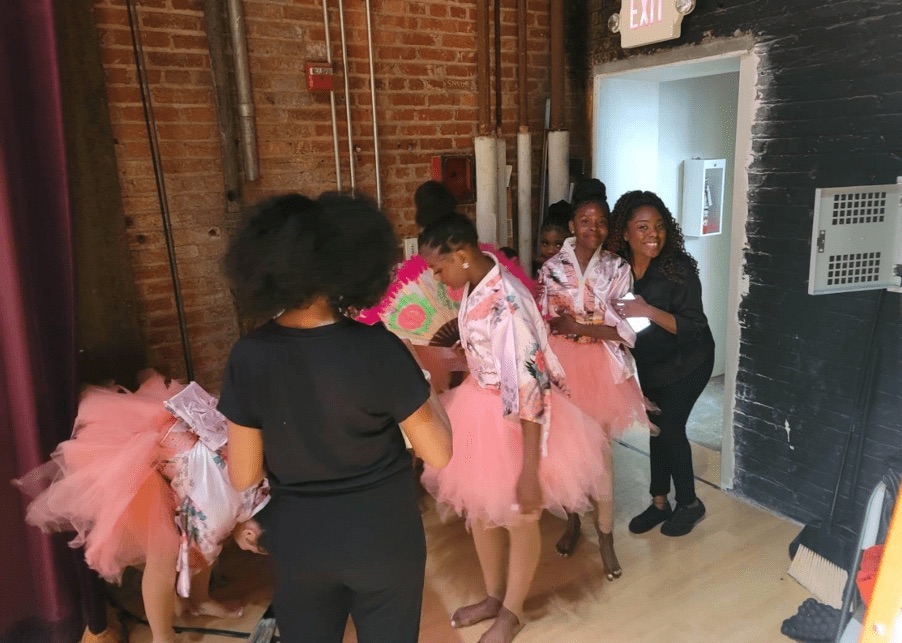
I worked as a music teacher to middle and elementary school students and helped them to make and prepare visual projects for end of year summary of what they learned.
As you can see, I assisted with the school’s dance concert and spring musical and I loved every minute.
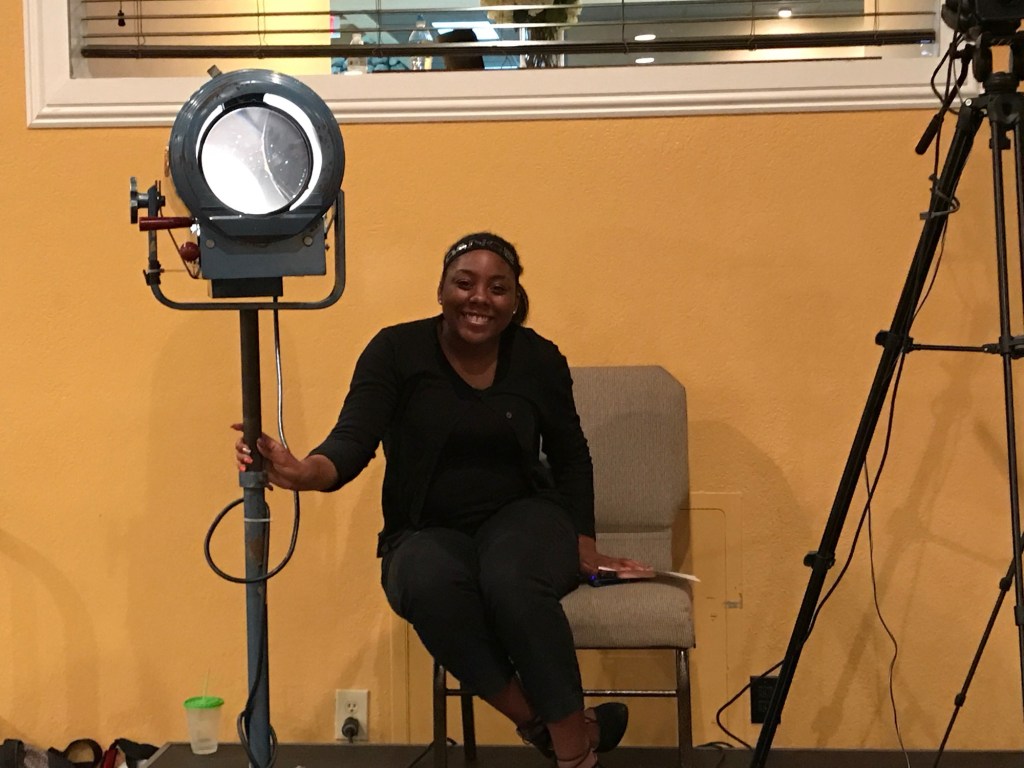
I even helped create lighting design, and that’s something I started 2015.
In undergraduate, I spent time singing in the University choir and working with my school’s theatre company as a choreographer as well.


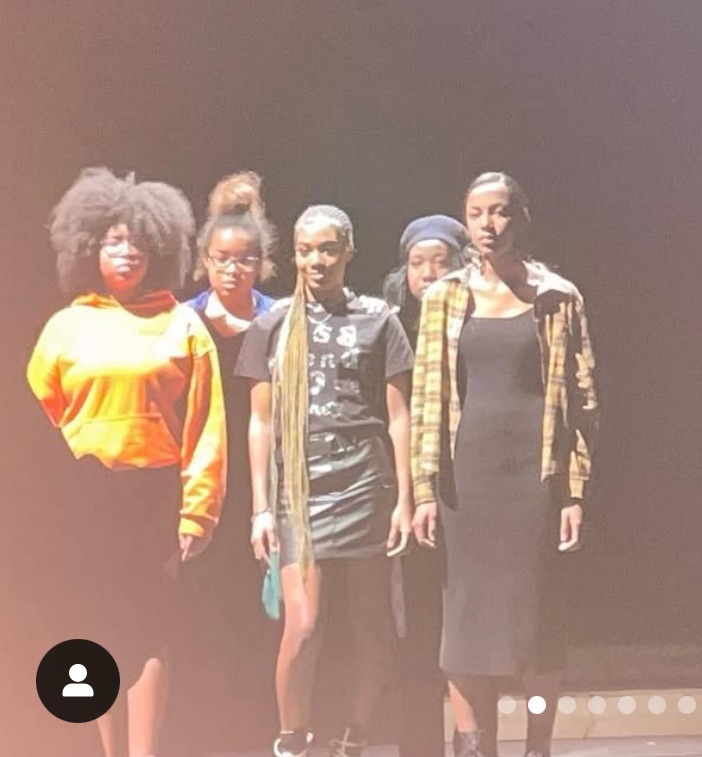
So you see, I can identify with Justice Jackson. I never put myself in a box, but express all sides of who I am in my professional and academic spaces. This is true representation.
This is history in the making .
This is Black history in the making.
I hope that others will be inspired to be encouraged to express every aspect of who they are professionally.
I know that it certainly inspires me.
Judge Ketanji Jackson on Broadway
Thanks for reflecting with me!
Until the next adventure,


Leave a comment